Ongoing

  1. AIHot
  2. Iran warHeating up
  3. Gauteng waterHeating up
Newsbrief

De Hoop: dunes, fynbos and a quiet Overberg coast
Published

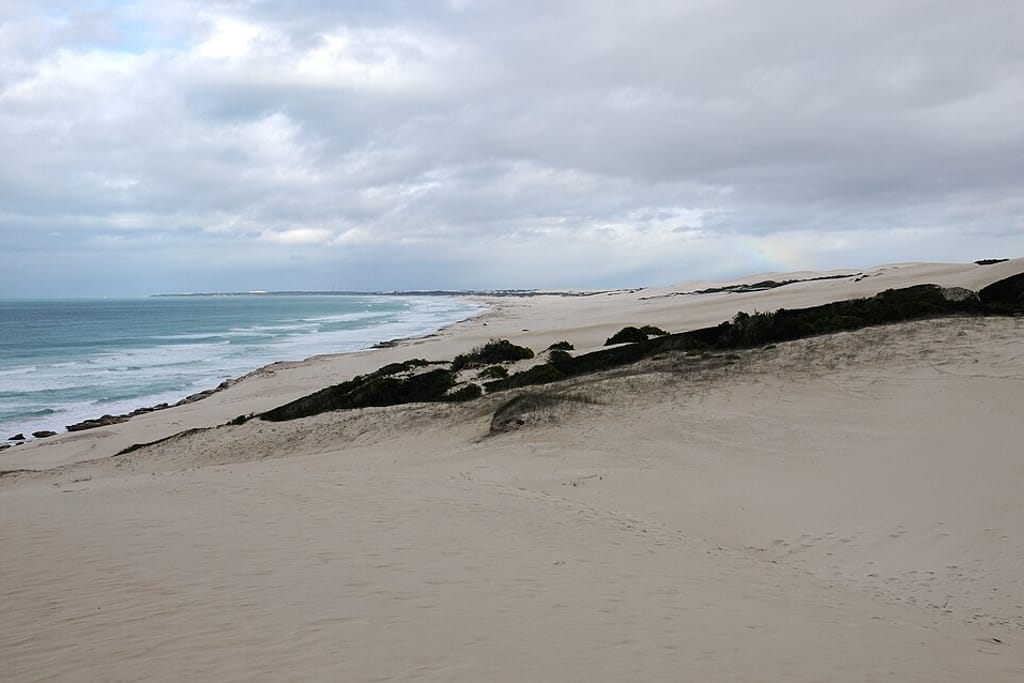
Wide white sand dunes sloping down toward the ocean under a cloudy sky.
Photo: Josep M. Gracia, CC BY-SA 4.0, via Wikimedia Commons

De Hoop is a coastal reserve in the Overberg with white dunes, fynbos, wetlands and wildlife. Go from September to November for flowers and late whales, or any time for calm, empty beaches.

Why go

De Hoop protects about 34,000 hectares in the Cape Floristic Region, a place of rare fynbos. Bontebok, Cape mountain zebra and eland graze near the Opstal homestead. De Hoopvlei, the large wetland, draws flamingos, pelicans and many other water birds.

The coast is the other draw. Large white dunes run down to De Hoop beach, and the Koppie Alleen area has rock pools and a long, quiet shore. Southern right whales calve offshore in the cooler months, and the multi-day De Hoop Whale Trail follows the cliffs. Guided nature drives and boat trips run from the main camp.
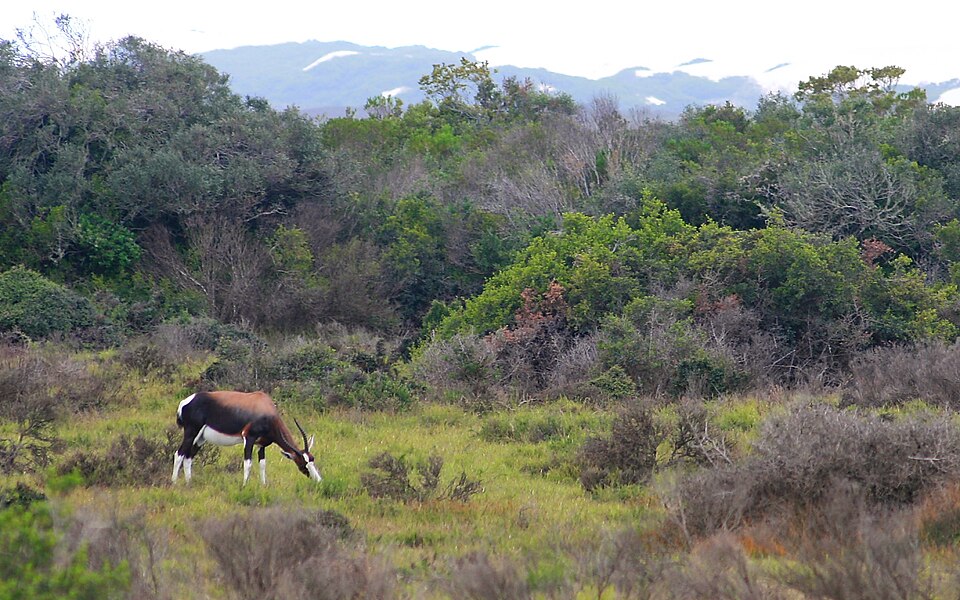
A bontebok grazes on open grassland with shrubs and mountains in the background.
Bontebok on the plains Photo: Hendrik van den Berg, CC BY 3.0, via Wikimedia Commons

Plan it

Best time
September to November for spring flowers and late whales. Whale numbers are highest from about June to November. Summer is hot and quiet.
Getting there
Drive from Cape Town in about 3 to 4 hours, via the N2 and Bredasdorp. From Johannesburg, fly to Cape Town and hire a car. Public transport is limited. Phone signal in the reserve is weak.
Visa
None
Stay
Self-catering cottages and guest suites inside the reserve, from about R2,000 to R6,500 a night per unit. Camping and lodges at both ends of the range are also available.
Budget
$$, Car hire, cottage and reserve fees
Good for
Nature lovers, birdwatchers, hikers and couples

Visa rules and prices change: check them before you book.

AI Hot

What you need to know

Anthropic shares traded as low as $76 by midday on Tuesday, nearly 12% below Monday's close and well under the $111.50 debut price on Nasdaq less than a week earlier. Nvidia chief executive Jensen Huang will appear at a public Senate Banking Committee hearing on 3 December, after lawmakers asked him to explain an affair and possible links to chip smuggling.

Earlier, Nvidia's board reinstated Huang on 23 November, reversing his resignation of 12 November, and shares rose sharply on the news. In South Africa, President Cyril Ramaphosa ended a five-day Silicon Valley visit by announcing a planned R100 million fund for AI start-ups and expecting an action plan within 90 days.

Separately, Eskom says it has about 6GW of spare daytime capacity and is trying to attract data centre investment.

  1. Nvidia and chip stocks slide as Wall Street ends mixed
  2. Kruger Park starts drone and AI survey of its south
  3. Malaysia's regulator sues Google over harmful YouTube content

See every update

Iran war Heating up

What you need to know

Iran's First Vice-President Mohammad Reza Aref said on 25 November that the US naval blockade does not worry Tehran, as cargo through Iran's other borders has risen sharply. Also on 25 November, US officials said they suspect Iranian hackers carried out up to 50 cyberattacks in recent weeks on oil, gas and chemical vessels across Asia and Europe.

Earlier, on 23 November, Iran's foreign ministry said the Strait of Hormuz will reopen only if Washington ends hostilities, lifts the blockade and waives sanctions. Meanwhile, Houthi fighters struck a Riyadh tower for the second time in a week on 24 November, and Saudi Civil Defense said at least 11 people were wounded.

Before that, on 12 November, US President Donald Trump said the US does not need a deal with Iran, though Iran's foreign minister said on 21 November that diplomacy can still work.

  1. Iranian pop star Parastoo Ahmadi reportedly flogged 74 times
  2. Iran says US naval blockade does not worry Tehran
  3. US officials suspect Iran in up to 50 ship hacks

See every update

Gauteng water Heating up

What you need to know

Cape Town and Drakenstein have brought in Level 1 water restrictions after dam levels in the Western Cape Water Supply System fell below 80 percent. Earlier, Minister Pemmy Majodina announced a 7% cut for domestic and industrial users and a 15% cut for irrigation in the Western Cape for 2026/27.

In Gauteng, Johannesburg Water introduced Level 2 restrictions, saying high demand strains Rand Water supply and the city must cut use by 200 million litres a day. Tshwane had already brought in Level 2 rules on 16 November, banning outdoor watering between 9am and 5.30pm because of high consumption.

Deputy President Paul Mashatile told the National Assembly that municipal officials who fail to provide water will face consequences, and cited 67 government water intervention projects.

  1. Cape Town and Drakenstein bring in Level 1 water restrictions
  2. Free State court rejects bid by sacked water employees
  3. Water department and banks to form joint funding teams

See every update