MIT team designs virus-based particle for personalised cancer vaccines
Engineers at MIT built a vaccine delivery particle from a harmless modified virus called M13, coated with cancer antigens. The study appears in the peer-reviewed journal Advanced Healthcare Materials.
Read moreShow less
Professor Angela Belcher and research scientist Shengnan Huang found they could control how densely the antigens sit on the particle. In mice, a vaccine with 35% antigen density protected better than one with 6%. Belcher says the design is modular, so different antigens could be swapped in for individual patients. The results come from mice only, and the approach is still preclinical.
Science
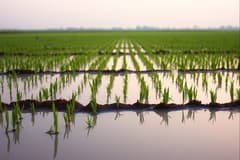
Antibiotics in rice paddy soil raise methylmercury production
A peer-reviewed study in Nature Communications reports that fluoroquinolone antibiotics in rice paddy soils increase the production of methylmercury, a neurotoxic form of mercury.
Read moreShow less
The authors attribute the rise to more active mercury-methylating bacteria, especially fluoroquinolone-tolerant sulfate-reducing bacteria. The study links common antibiotic pollution to a neurotoxin building up in paddy fields. Rice is a staple food in parts of southern Africa, so the finding raises a food-safety question. Only a short abstract was available, so the sample size, the locations and the size of the effect are not known.
Science
South African researcher names three 90-million-year-old insects from Botswana
Dr Sandiso Mnguni of North-West University has identified two new species of jumping plant lice and one aphid from fossils found at Botswana's Orapa Diamond Mine. He says the aphid is the first complete fossil aphid from Africa.
Read moreShow less
Mnguni, a senior lecturer in agriculture at the university's Potchefstroom Campus, studied fossils collected in the 1980s and stored at the University of the Witwatersrand. He began the work in 2018 with researchers from the Agricultural Research Council, Citrus Research International and the University of Fort Hare. He says the work may help farmers understand how crop pests evolved. That benefit is his expectation for the future, and the university release does not cite the published papers.
Science
Study finds similar evolutionary shifts across vertebrate lineages
A study in Nature Communications examines how vertebrate species shift between adaptive peaks when they move into aquatic, terrestrial and aerial environments. It reports similar size and frequency of these shifts in lineages separated by millions of years.
Read moreShow less
The study is peer-reviewed. Its findings suggest that evolution may be more repeatable than often assumed. Only a short abstract-style excerpt was available, so the methods and the number of species studied are not known. The authors and their institution are also not named in it.
ScienceWorld
COP17 ends in Armenia with two texts and mixed reaction
Delegates at the COP17 biodiversity summit in Yerevan approved two major texts in overtime, but critics said the outcome fell short on nature goals, science disputes and conservation funding. Ecuador will host the next talks in 2028.
Read moreShow less
Nearly 200 nations struck agreements at the two-week UN summit. Ecuador won the right to host the next biodiversity talks in 2028 after it defeated Panama in a secret vote.
French Ecological Transition Minister Monique Barbut said the outcome was "not commensurate" with the crisis facing the natural world. She said the progress that was not achieved is a series of missed opportunities to speed up the response to biodiversity loss.
Decisions on the design of the Cali Fund are deferred for two years. Pakhi Das of the nonprofit Plant-for-the-Planet said this all but ensures the fund stays empty until then.
Guido Broekhoven of WWF International called the text a positive step forward, with weaknesses on harmful subsidies. An Lambrechts of Greenpeace International said the text expresses political momentum on harmful incentives in weak terms. Observers and delegates also accused some countries of undermining efforts to approve key reports.
Science
Magnetic beads in muscle could steer wearable robots
A team from Hugh Herr's group describes a skin-mounted sensor array that tracks tiny magnetic beads implanted in human muscle. The peer-reviewed paper appears in Nature Sensors.
Read moreShow less
The beads are passive and 3 mm wide, and the array tracks them wirelessly. The authors report sub-millimetre resolution of real-time muscle movement at depths of up to 6 cm. They propose the signal as a way to control wearable robotics, such as prostheses and exoskeletons. The work is at device stage, so clinical use is still some way off.
Science
Study finds comets unlikely to have seeded early Earth with life's chemicals
A University of Cambridge team modelled whether comets could have delivered molecules such as hydrogen cyanide to early Earth. They found comets would likely vaporise on impact, so delivery would be at best a rare "one-off fluke".
Read moreShow less
The study is peer-reviewed and appears in Scientific Reports. The team found that Mars could have been a slightly more promising site for such delivery, though still highly unlikely. They say asteroids and chemistry on Earth itself are now seen as likelier sources of life's building blocks. The work is computer modelling, so its conclusions depend on the model's assumptions, and the authors say they cannot rule the scenario out completely.
Science
Bats in Africa may keep a suitable climate but lose roosts
Researchers at the University of Pretoria modelled where cave-roosting long-fingered bats could live in sub-Saharan Africa. They project that climatically suitable areas will shrink by 36% to 64% by 2061 to 2080.
Read moreShow less
The study by Pretorius and Keith appears in the peer-reviewed journal Austral Ecology. Only about 5% of the karst that suits roosts overlaps with the suitable future climate. That falls to about 2% once the model counts the vulnerability of land cover. This shows that a species can have a suitable climate ahead and still have nowhere to roost, because the geology has no caves. The work is a model of one bat family, based on 551 occurrence records.
Science
Study links protein THBS1 to scarring and inflammation in belly fat
Researchers studied single nuclei from human visceral fat to see what drives fibro-inflammatory changes linked to obesity and type 2 diabetes. They report that the protein THBS1 promotes fibrosis and inflammation. The peer-reviewed paper appears in Nature Communications.
Read moreShow less
The authors say THBS1 acts through the activation of TGFβ in macrophages, a type of immune cell. This points to a possible molecular driver of the scarring and inflammation in belly fat that comes with obesity and diabetes. The work is mechanistic and early, and it does not show that THBS1 is a treatment target in people.
Science
Wits survey links loadshedding to worse sleep in students
Sleep scientists Joshua Davimes and Karine Scheuermaier surveyed more than 1,100 University of the Witwatersrand students in 2023. Nearly three in four said loadshedding affected their sleep, and students with backup power had about 60% lower odds of reporting worse sleep.
Read moreShow less
The peer-reviewed study appears in Sleep Health. Broken sleep was the most common complaint, and outages between 8pm and half an hour past midnight were the most disruptive. Only 40% of students had backup power, and solar users reported worse sleep less often than generator users. The survey was self-reported and done at one university, so it shows an association, not a cause.
SciencePolitics
South Africa and Netherlands extend Blue Deal water partnership
The Department of Water and Sanitation and the Dutch Water Authorities signed a declaration of intent in Cape Town on Thursday. The third phase of the partnership covers 2027 to 2030 and focuses on Catchment Management Agencies.
Read moreShow less
Water and Sanitation Director-General Sean Phillips gave the keynote address at the signing. He said the Blue Deal supports national water-sector priorities. Phillips said: "In South Africa, the Blue Deal supports national water-sector priorities, including the National Water Action Plan".
The Dutch side was represented by the Dutch Water Authorities, known in Dutch as the Unie van Waterschappen. Its president is Jeroen Haan. The Steering Committee endorsed the strategic direction for Phase III on 7 October 2026.
Science
African horse sickness confirmed in one horse in Cederberg
The Department of Agriculture confirmed the case on a property in the Western Cape, caused by AHS virus serotype 7. It has set movement restrictions and an outbreak containment area, and it strongly discourages vaccination for now.
Read moreShow less
Laboratory tests at the University of Pretoria's Veterinary Genetics Laboratory confirmed the virus. Surveillance in the area is now more intense. The Western Cape Department of Agriculture will issue updates on containment measures, movement restrictions and permits.
Agriculture Minister Willie Aucamp said there is no proof of large-scale disease activity outside the property. He said the quick detection shows how the veterinary surveillance system works. His statement said: "While there is no proof of large-scale disease activity outside the said property, the department is focused on total vigilance".
The department said vaccinating while midges are active could spread the vaccine strain and worsen the situation. It advised owners to stable horses from two hours before sunset until two hours after sunrise to protect them from midges.
Science
Magnetic beads in muscle could improve prosthetic leg control
Researchers at MIT have shown they can track muscle length, velocity and activation with tiny magnetic beads implanted in the muscle. The study appears in the peer-reviewed journal Nature Sensors.
Read moreShow less
Professor Hugh Herr and graduate student Christopher Shallal tested the method in three people with below-knee amputations. Today's prostheses rely on skin electrodes, which Herr's team says have not proved reliable enough for safe walking. Shallal says the method is minimally invasive, because only two beads go into the muscle. The study was small, and the team's hope of commercial development has not yet been met.
Science
Animal bones in Malawi hint at how foragers shared food
Archaeologists working in northern Malawi studied almost 13,000 animal bone fragments from the Hora 1 rock shelter. The bones cover the last 21,000 years of human occupation and suggest food was scarce.
Read moreShow less
In an article on The Conversation, the archaeologists say most bones came from small animals that people hunted close to the site. Many finger and toe bones had been broken open for marrow. The team links this to cooperation within a group and a limit on how far people ranged. They say they published a paper on the work. The conclusions about social life are interpretation, and they come from one site.
Science
Study finds proteins grew more oxidised over Earth's history
A study in the journal Nature Communications reports that proteins across the tree of life became more oxidised over Earth's history. The change was strongest around the Great Oxidation Event, about 2.4 billion years ago.
Read moreShow less
The authors say this fits the idea that evolution favoured protein sequences with lower energy. The work links the rise of oxygen in the atmosphere to the chemistry of proteins in living things. The study is peer-reviewed. The authors describe the result as consistent with that idea, not as direct proof, and only a short summary of the work was available for this post, so the strength of the evidence is not clear.
Science
New simulation tracks how early stars and black holes lit the universe
Physicists at MIT, Harvard University and other institutions have built Lumina, a computer simulation of the early universe. It follows the dark ages and the next 2 billion years, and it covers a patch about 1.6 billion light-years wide.
Read moreShow less
In the simulation, hydrogen re-ionization was likely driven by light from early galaxies and stars. Helium re-ionization was fuelled by early supermassive black holes. Professor Mark Vogelsberger of MIT says the volume is 100 times larger than the previous best simulations. The paper appears in the peer-reviewed Monthly Notices of the Royal Astronomical Society. Lumina is a model, so it does not observe the early universe directly.
Science
New Drimolen fossils support early Homo erectus in southern Africa
Researchers have described 18 newly published hominin fossils from Drimolen Main Quarry in the Cradle of Humankind. One is an adult Homo erectus, and 14 are Paranthropus robustus.
Read moreShow less
The authors are Martin, Leece, Baker, Herries and Strait, and the work is peer-reviewed in the journal Annals of Human Biology. The Homo erectus specimen adds support for the species living in southern Africa about 2 million years ago, roughly 200,000 years earlier than traditionally thought. The team also describes a new jaw feature that helps tell the Drimolen Paranthropus apart from other South African samples. The Homo erectus finding rests on one adult specimen, so it adds support but does not settle the date.
Science
Drug-resistant bacteria found in air at Johannesburg clinic
A University of Johannesburg study found that 96.3% of the Gram-positive bacteria tested from a crowded high-rise clinic were resistant to multiple types of antibiotics. The researchers said the study covered one clinic and did not show that patients were infected.
Read moreShow less
The study appeared in the journal Indoor Air. Researchers took air samples in 40 areas of the clinic in central Johannesburg. They also grew 77 moulds from the air, and 22 were different enough to be identified by DNA testing.
Among Gram-negative bacteria, 85.7% were resistant to cefuroxime and 67.5% to ceftazidime. Some 31.2% of bacteria were resistant to ertapenem and 26% to meropenem. About 3.9% of Gram-negative bacteria were extensively drug-resistant. More than 85% of Eskape bacteria in the neonatal intensive care unit were multidrug-resistant.
Lead author Dr Lee Heine, of the university's Water and Health Research Centre, said the findings are concerning given South Africa's high rates of HIV and TB. She said resistance to antibiotics is rising for all bacteria in South Africa and worldwide. Heine called for air quality monitoring to become routine in infection prevention and control in healthcare facilities.
The researchers said the findings cannot be assumed to reflect conditions at all healthcare facilities. They also said unreliable water supplies are a challenge, because shortages can affect disinfection and infection prevention.
Science
Environmental activist Desmond D'Sa dies in car crash aged 70
Desmond D'Sa, a community organiser and winner of the Goldman Environmental Prize, died on Thursday in a car crash on the KwaZulu-Natal south coast. Two family members in the vehicle also died.
Read moreShow less
D'Sa worked at the South Durban Community Environmental Alliance (SDCEA). A report said he and his relatives were travelling to the SDCEA offices in Wentworth when the crash happened. Tributes have been pouring in, including from humanitarian activist Lubna Nadvi.
D'Sa won the Goldman Environmental Prize in 2014. He received the Diakonia Human Rights Award in 2013. His work centred on communities in South Durban.
In the SDCEA biography, D'Sa said: "We are not anti-development, but we are anti-air pollution. We welcome sustainable development,"
Science
Colder seas may explain a quarter of ice-age CO2 drop
A paper in Nature Communications proposes that plankton respiration slows more than photosynthesis in colder water. The authors estimate this effect explains about a quarter of the fall in carbon dioxide during the last ice age.
Read moreShow less
The authors argue that when respiration slows more than photosynthesis, more carbon sinks to the deep ocean. This offers a physical explanation for part of a long-debated question in climate science. The paper is peer-reviewed. The quarter figure comes from the authors' modelling, and other researchers have not independently checked it. It is also an estimate of past climate, not a measurement.
Science
SANParks fines Take Back Our Mountains over guided hike
SANParks treated a 16-person guided hike as an event and fined the community initiative. Founder Taahir Osman says the group is considering withdrawing some activities from Table Mountain and wants clarity on permit rules.
Read moreShow less
The hike charged R150 a person. Osman said it was meant to create paid opportunities for unemployed men. He described his role in the hike this way: "I'm the registered guide, and I'll bring in people from the Khoi and San to talk about the history of Table Mountain and the culture".
Take Back Our Mountains has run clean-ups, safety patrols and educational hikes since 2018. Osman said the clean-ups need a permit because the group pays a stipend to about 30 community members who do the cleaning.
Osman said the organisation still waits for a memorandum of understanding with SANParks. The two sides first discussed it in 2023.
Science
Deputy Minister Gina launches WRIGHT platform for women researchers in Durban
Deputy Minister of Science, Technology and Innovation Nomalungelo Gina launched the Women in Research Initiative for Growth and Transformation (WRIGHT) at Mangosuthu University of Technology on Wednesday. The university is investing R2 million in research initiatives for first-time researchers.
Read moreShow less
WRIGHT aims to advance women's participation and leadership in research and innovation. Gina said representation alone does not guarantee equal opportunities for advancement and leadership. She said WRIGHT could help ensure that women are supported to build sustainable research careers and take leadership positions.
Gina cited figures from the 2023/24 National Survey of Research and Experimental Development. Women make up 47.7% of South Africa's research workforce and 52% of the academic workforce. They make up 62.6% of university enrolments. She also said South Africa's performance in patenting and commercialisation remains below desired levels.
Gina urged the WRIGHT Steering Committee to build partnerships and share lessons. She said: "Women must be able to take part at every point of that journey". The programme included the university's interim vice-chancellor Rushiella Songca, CAPRISA deputy director Kogieleum Naidoo and patent attorney Omphile Netshiozwi.
CrimeScience
Cape Town woman fined R250,000 for keeping 145 reptiles
Jacqueline Hewett must pay the fine or serve four years in prison after her conviction for unlawfully possessing and keeping the reptiles. The court also bars her from getting a permit to keep wild animals in captivity in the Western Cape for five years.
Read moreShow less
Officials found the reptiles at a shop in Observatory and a home in Woodstock during an operation in 2023. Hewett was convicted of unlawful possession and keeping of all 145 animals.
CapeNature said the case shows the environmental risks of illegal wildlife trafficking. Spokesperson Luke Folb said escaped or deliberately released alien reptiles may form invasive populations. He said they can prey on indigenous species and compete for food and habitat.
Folb said the unlawful trade and keeping of reptiles can deplete wild populations. He also said it can bring diseases and parasites to indigenous wildlife.
Science
KwaZulu-Natal HIV progress has stalled since 2019, study finds
Researchers at the Africa Health Research Institute and Stellenbosch University found that new HIV infections in a rural KwaZulu-Natal population fell by 55% between 2010 and 2024-25. The study, in The Lancet HIV, found no evidence of a continued decline between 2019 and 2025.
Read moreShow less
Professor Frank Tanser is the senior author, and Dr Elphas Okango is the lead author. Incidence fell from 3.32 to 1.49 new infections per 100 person-years. From 2019 to 2025, detectable viraemia rose by 9.6 percentage points, and incidence stayed flat or rose among adults aged 35 to 54. The study is peer-reviewed, but the cohort is rural and not nationally representative.
Science
Jurassic swimming mammaliaform shows how mammal throats evolved
Researchers have named a new fossil animal, Megacauda sungei, a swimming mammaliaform that foraged in water in a way comparable to the modern platypus. Their work is peer-reviewed and appears in the journal Nature.
Read moreShow less
The fossil shows that the animal could swallow and suckle like a mammal. It fills a gap in how the throat features evolved that let mammals swallow as adults and suckle as babies. The details available to us do not name the research team or give the size of the animal, so this account is limited to the main finding.
Science
New method sequences Cryptosporidium straight from patient samples
Researchers have developed a way to sequence the Cryptosporidium parasite directly from patient samples, without first growing it in the lab. Their peer-reviewed study appears in Nature Communications.
Read moreShow less
The team used the method to find genetic differences between parasite populations. They say these differences help explain how the parasite spreads between humans and animals. Cryptosporidium is a common cause of diarrhoeal disease in children in South Africa and across Africa, so better tracking of its spread could matter for public health. Only a short summary of the study was available, so the sample sizes and detailed findings are not yet clear.